Winterization in Ukraine: From Emergency Measures to Systemic Preparedness
At an international event, Ukrainian and German experts highlight battery storage, distributed solar, and coordinated donor action as key to Ukraine’s long-term energy strategy.
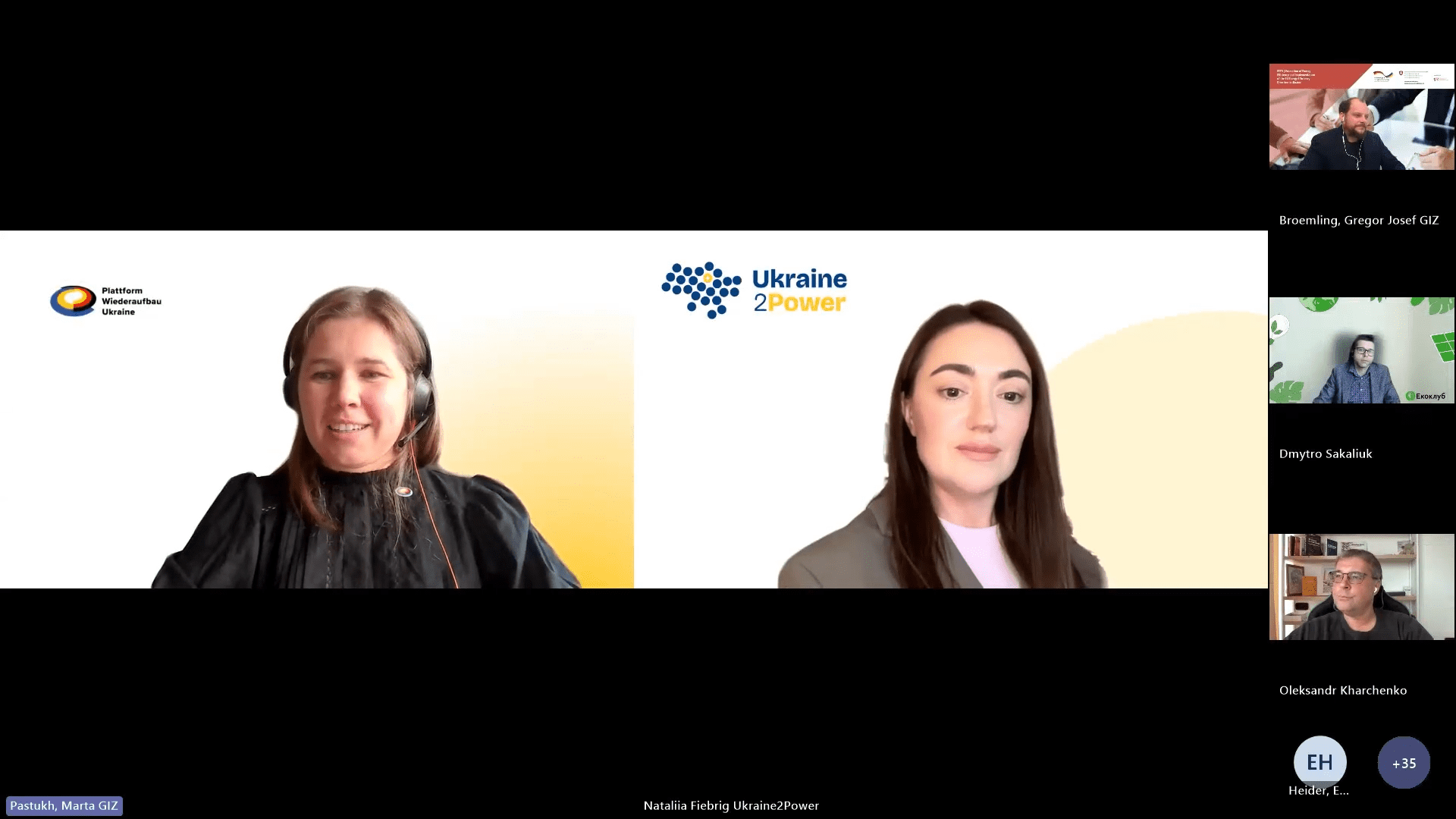
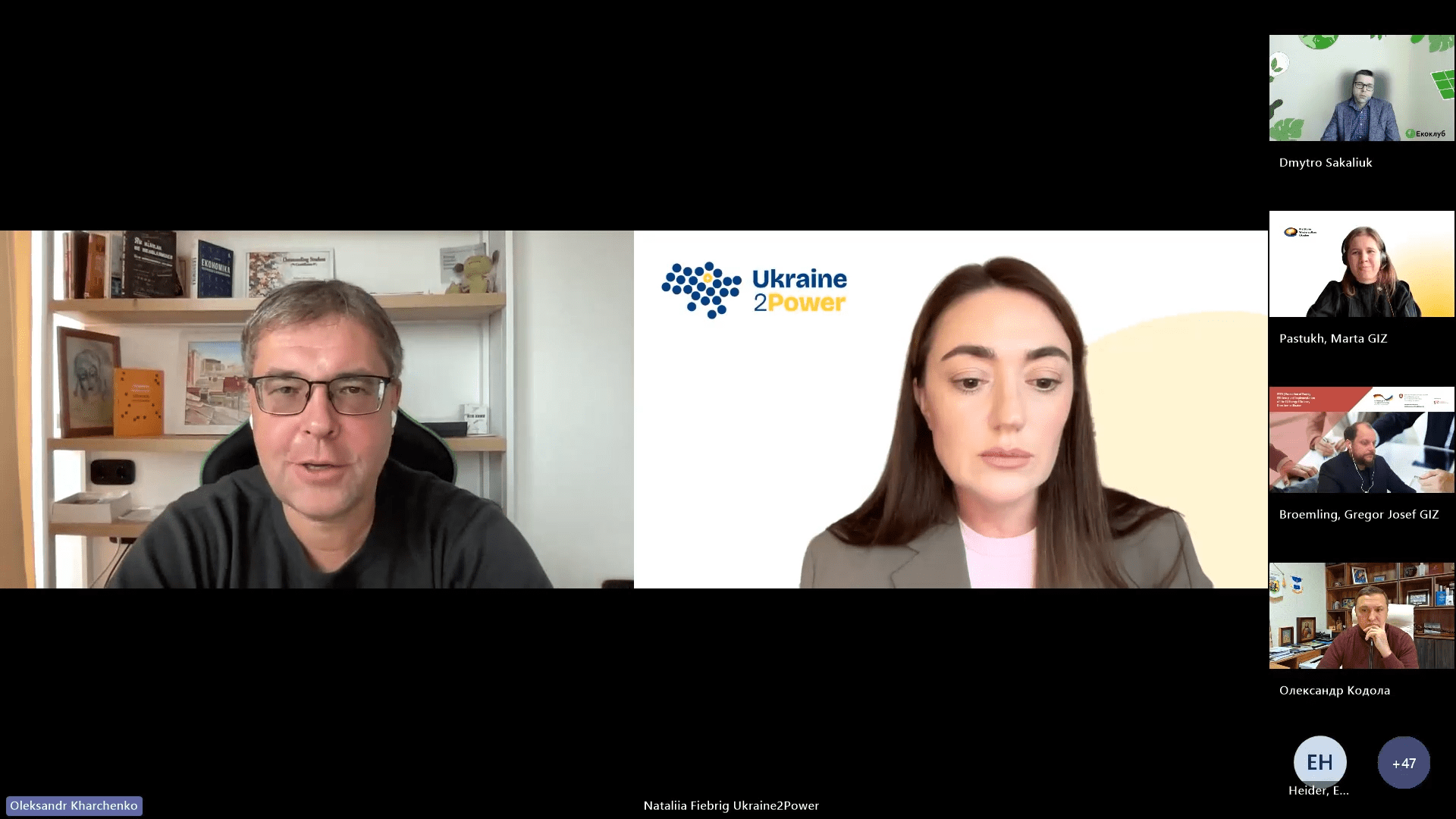
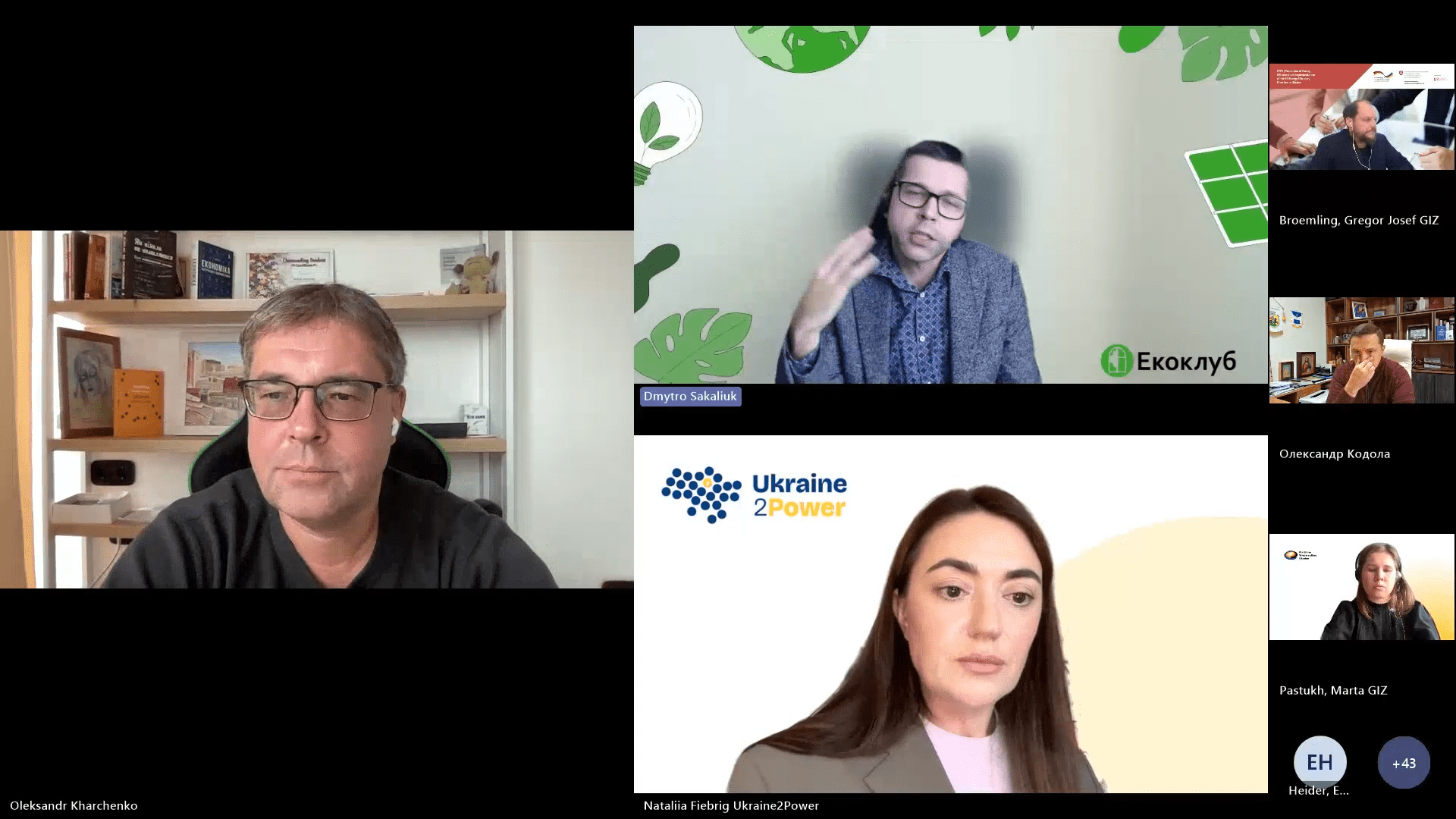
Berlin / Kyiv, October 8, 2025 — As Ukraine faces another winter under fire, Ukraine2Power and the German Platform for the Reconstruction of Ukraine convened energy experts and municipal leaders to discuss how the country can move from emergency energy aid toward long-term, systemic preparedness. Moderated by Nataliia Fiebrig, Co-Founder and Director of Ukraine2Power, the online event “Winterization in Ukraine: From Emergency Measures to Systemic Preparedness” offered a forward-looking view of how Ukrainian communities are surviving and adapting under relentless attacks on critical infrastructure.
From survival to strategy
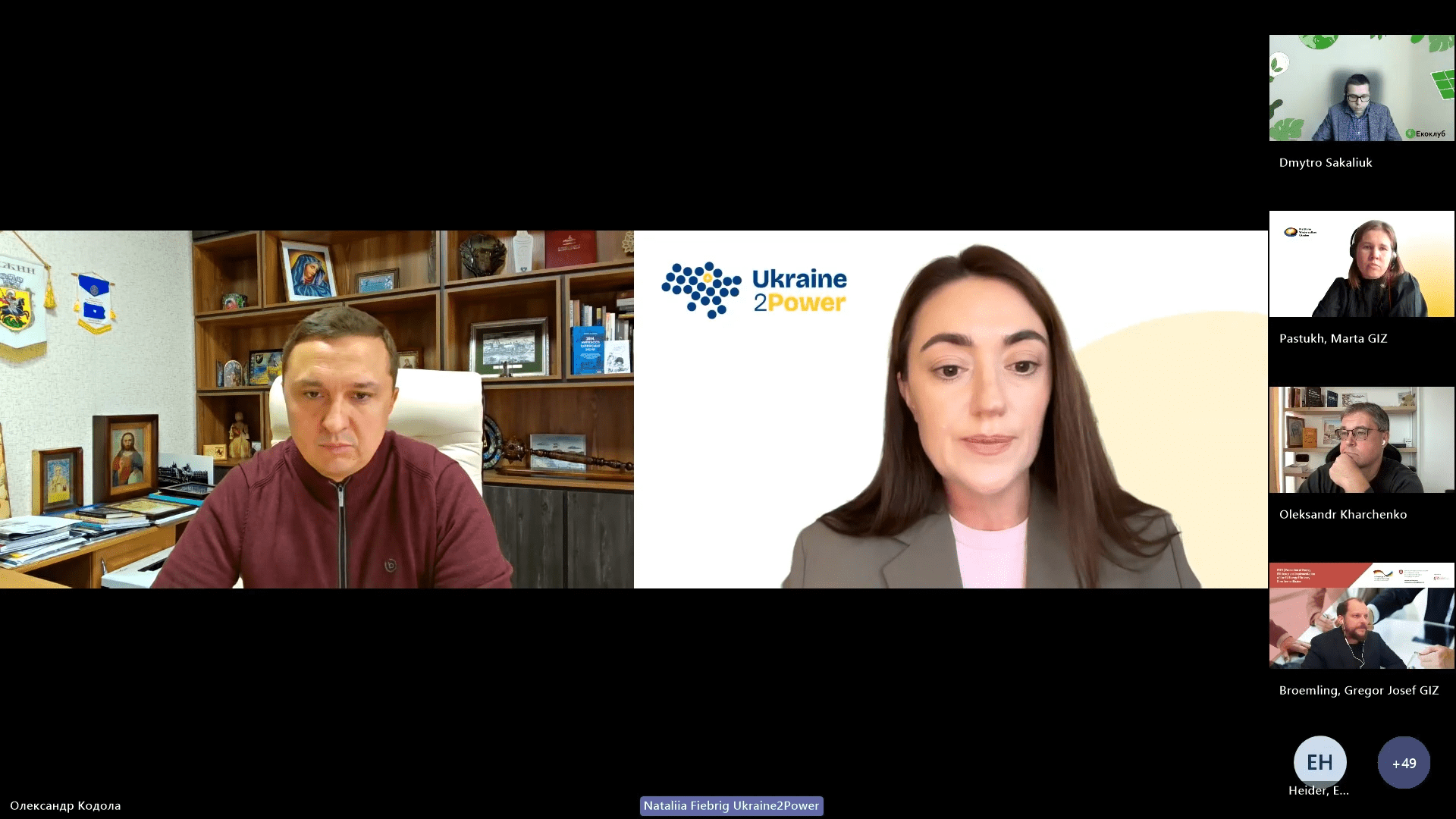
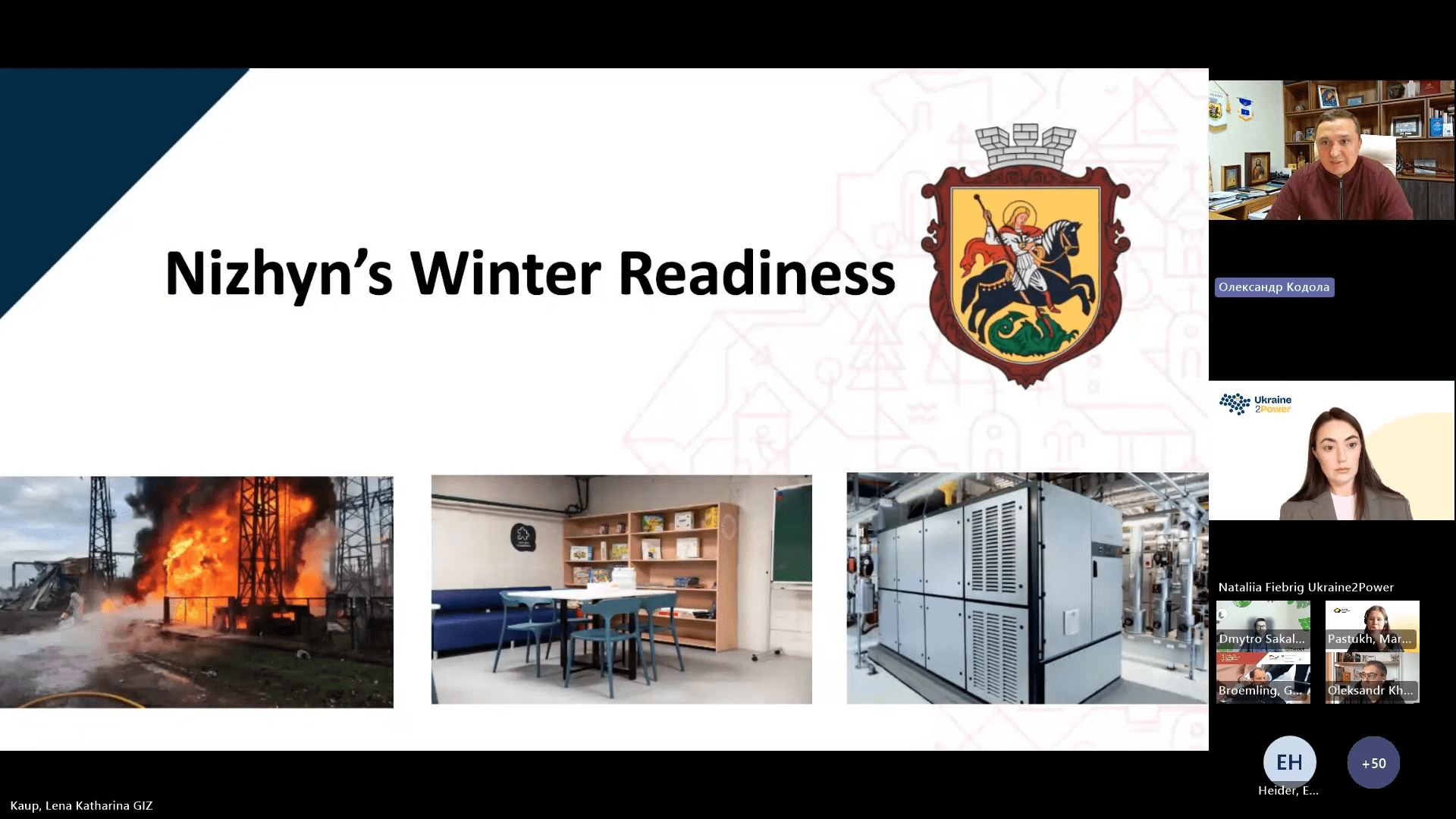
“During the first wartime winter in 2022–2023, we fought simply to survive using whatever equipment was available. Today, our approach is more structured and focused on long-term stability.” — Oleksandr Kodola, Mayor of Nizhyn.
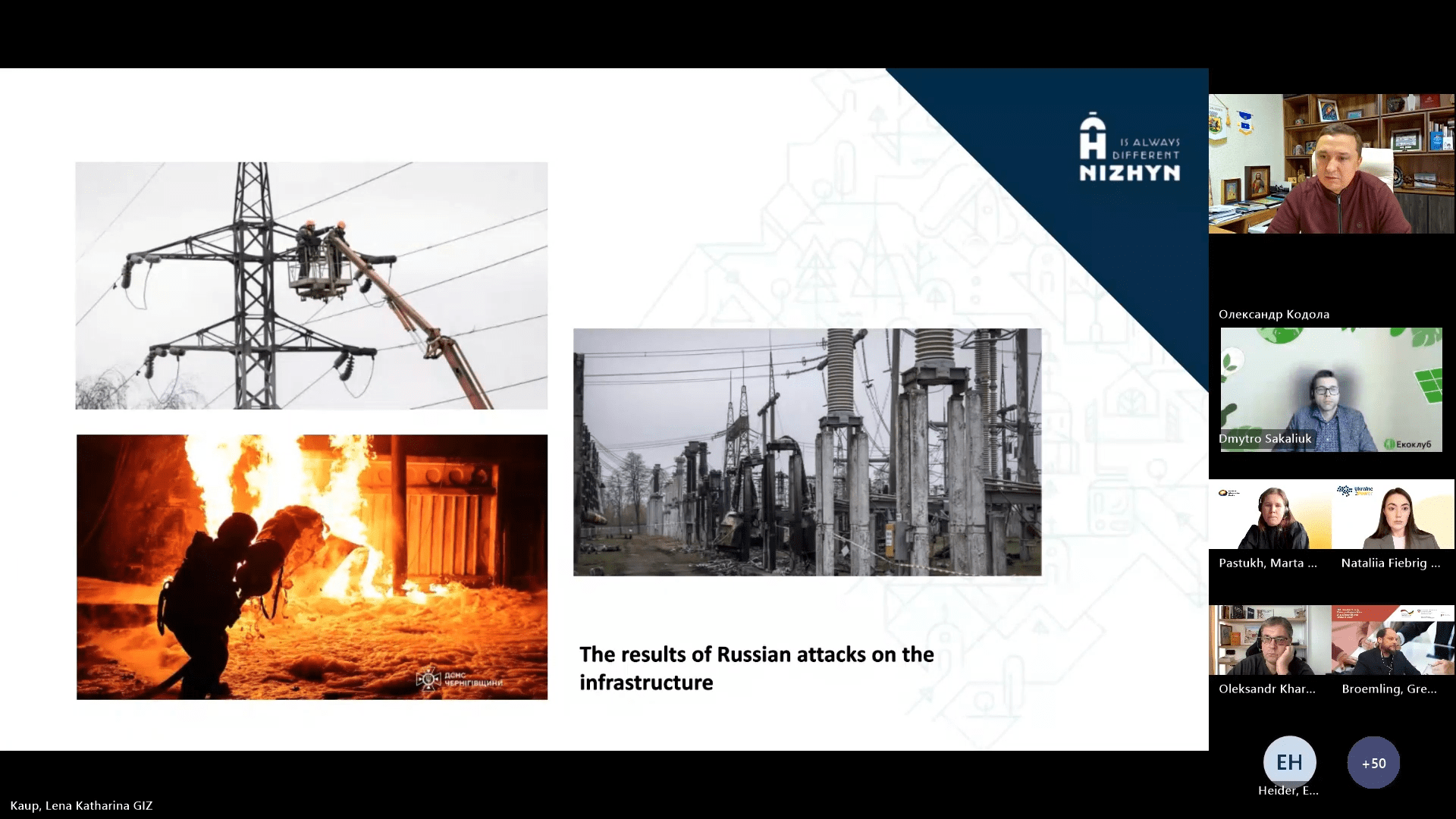
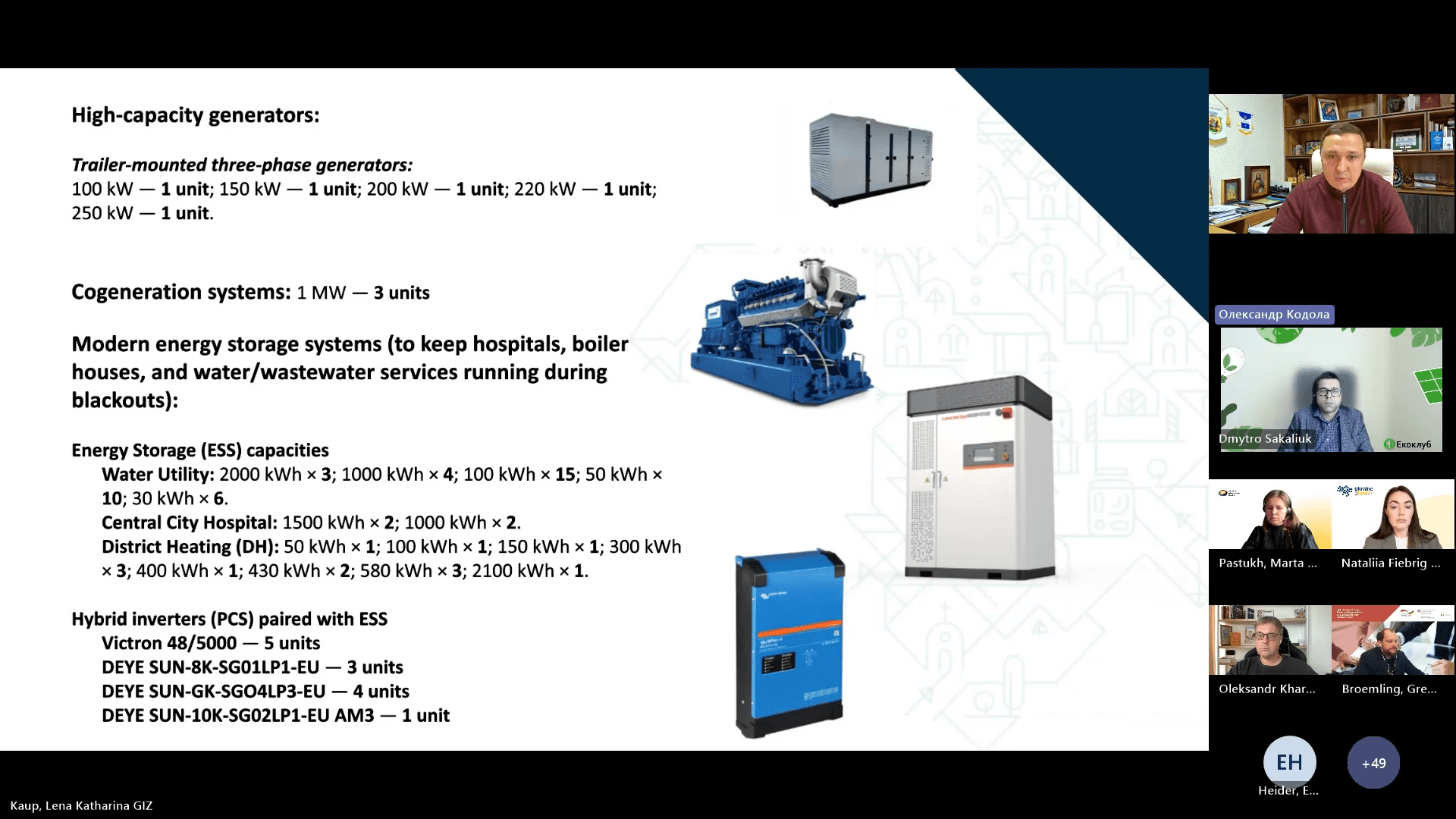
Only hours before the discussion, the northern city of Nizhyn suffered another wave of drone strikes, hitting railways and energy facilities. Joining live from a city under attack, Mayor Kodola described constant power cuts, fuel shortages, and the strain on local services. He outlined the city’s urgent needs: high-capacity generators (100–250 kW) for hospitals and water systems, combined heat and power units to improve efficiency and cut CO₂ emissions, and modern energy storage to ensure stable supply.
“Without continued international support, this winter will again be an enormous challenge. With your help, we can keep hospitals open, protect lives, and preserve human dignity.”
German support and long-term partnerships
Gregor Broemling, Head of GIZ’s “Promotion of energy efficiency and implementation of the EU Energy Efficiency Directive” Project, presented GIZ’s comprehensive support to Ukraine’s energy sector, spanning both emergency response and structural reform.
“GIZ has supported more than 50 municipalities in developing municipal energy management systems and energy planning and has trained over 11,000 specialists in the sector,” Broemling said. “With funding from BMZ, GIZ was able to supported 175 power and heat supply units as part of the latest winter aid. This is not only repairing damages but also supporting long-term local energy security.”
He stressed that resilient recovery requires conceptual planning, capacity-building, and tailor-made solutions for each case resp. community: “Donations and provisions of equipment are vital, but so are the system integrations and set ups that make them work. Local planning, skilled teams, and coordination turn equipment into lasting resilience.”
Expert blueprint for energy resilience
Energy analyst Oleksandr Kharchenko, Director of the Energy Research Center, outlined a layered model of resilience based on Ukraine’s field experience. “Ukraine’s power system is stronger than a year ago, but the attacks are shifting to regional substations and heating systems. The priority now is to protect communities locally.”
Kharchenko proposed a four-step framework:
1. Battery-first approach: “Every school, hospital, or shelter should have battery storage. It’s the fastest way to protect lives during blackouts.”
2. Rooftop solar integration: “Use every available roof. Even 50–200 kW helps sustain local power.”
3. Gas-fired cogeneration for heating and water systems.
4. ‘Islanding’ capability — local generation that allows cities to operate autonomously if disconnected from the grid.
“You can’t prepare for this winter in September,” Kharchenko warned. “We must plan now for the next and the one after that.”
Local innovation through solar and storage
Dmytro Sakaliuk, an energy expert of the Ecoclub Rivne, confirmed that distributed solar is a viable and strategic solution, even near the front line. “It’s easier to destroy one substation than a thousand rooftop solar plants,” he said.
“Decentralization makes Ukraine harder to break.”
Sakaliuk compared energy costs to show the shift from emergency to efficiency: “Electricity from a generator costs around €1 per kWh, from the grid about €0.25, while solar is cheaper still. Communities are now asking for independence, not just survival.”
He also underlined the need to build skills through pilot projects: “When local engineers help install the first system, they learn to replicate it. That’s how real resilience begins, learning by doing.”
A call for coordination and foresight
Moderating the event, Nataliia Fiebrig emphasized that Ukraine2Power’s mission is to connect international support with local implementation and to ensure that aid transitions into sustainable systems. “Our aim is not just to help Ukraine survive the next winter, but the next dozens of winters,” Fiebrig said. “Communities need to plan, not panic. They need partners who listen to their needs”.
She highlighted that Ukraine2Power has evolved from providing emergency aid such as mobile charging systems into installing solar and battery systems in schools and hospitals, proving that local energy independence is achievable even under wartime conditions.
Key takeaways
• Battery storage is the fastest life-saving measure for public buildings and shelters.
• Distributed solar power offers scalable, attack-resilient energy security.
• Gas-fired cogeneration and hybrid systems can sustain critical utilities during blackouts.
• Capacity-building and municipal energy planning turn donations into sustainable systems.
• Coordination between donors and local partners is essential for effective reconstruction.
“This discussion showed that Ukraine’s recovery will not be built on emergency aid alone,” Fiebrig concluded.
🎥 Watch the full recording: https://www.youtube.com/watch?v=NJRqntF0OIg
About the organizers Ukraine2Power is a Ukrainian NGO providing sustainable energy support to communities, helping Ukraine build lasting energy independence even during war.
The German Platform for the Reconstruction of Ukraine is a federal initiative offering a forum for German and international partners to exchange knowledge, create synergies, and develop innovative solutions for Ukraine’s recovery.


Also interesting
Café Kyiv 2026: What Berlin Can Learn from Ukraine About Blackouts and Energy Resilience
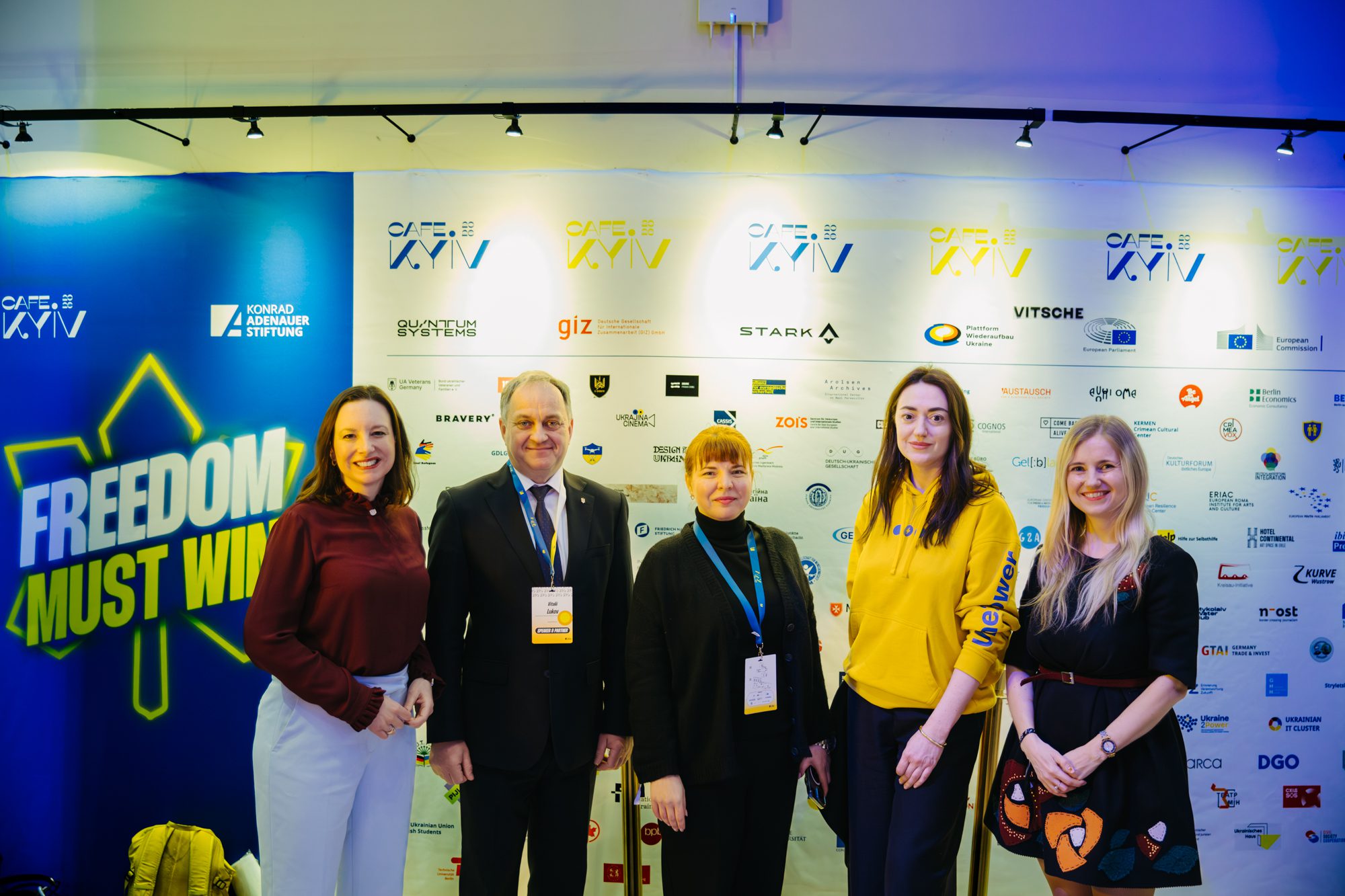
The panel discussion "No Power. No Panic. Blackouts: Lessons from Kyiv to Berlin" at Café Kyiv 2026 highlighted a shared vulnerability: modern societies depend entirely on functioning energy systems. From frontline cities to European capitals, strengthening resilience means protecting energy, water and heating through coordination, investment and decentralisation before the next crisis strikes.
Café Kyiv 2026 | No Power. No Panic. Blackouts: Lessons from Kyiv to Berlin
If you’re attending Café Kyiv, we at Ukraine2Power would like to invite you to join our panel on 23 February 2026.

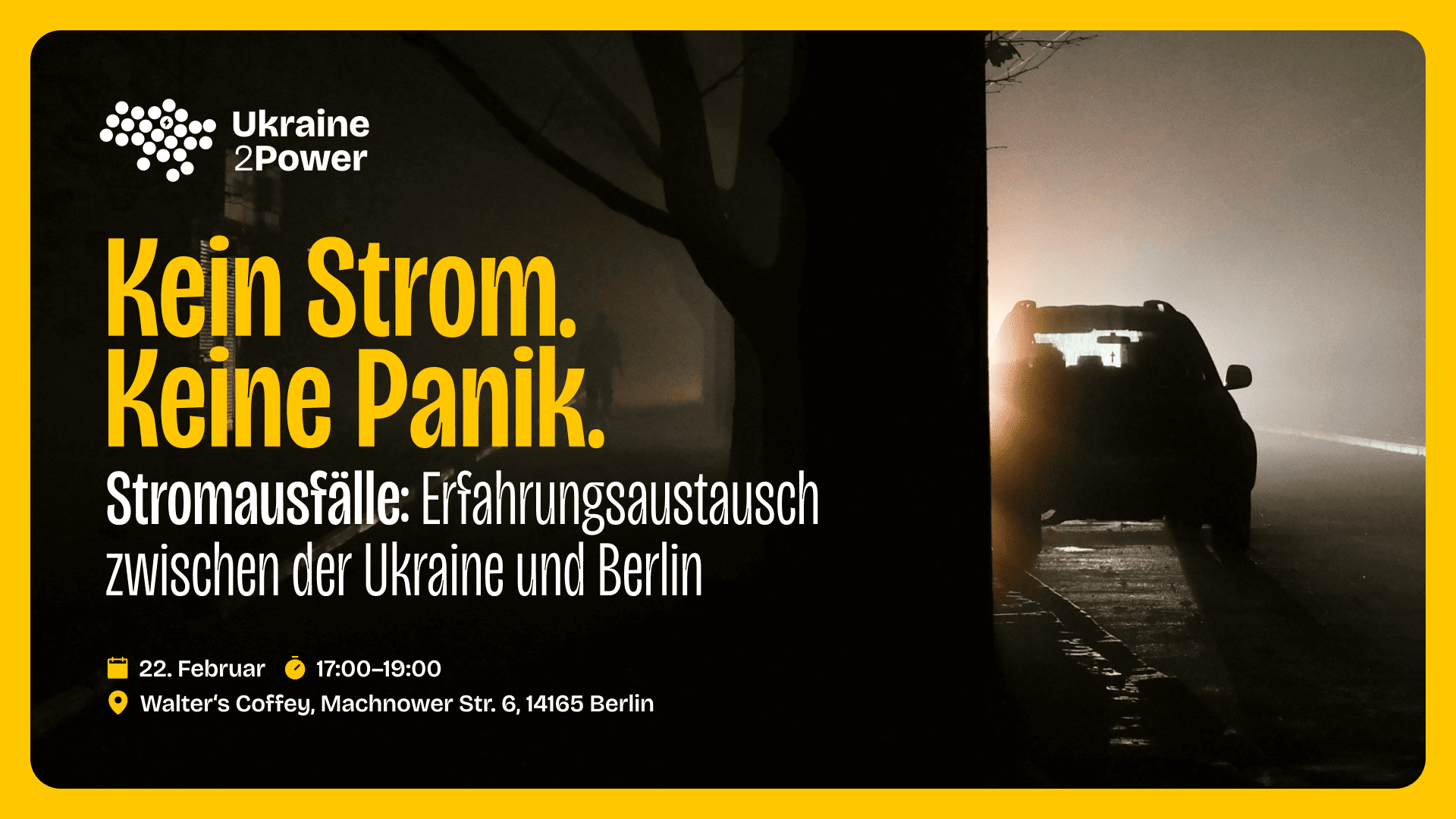
Kein Strom. Keine Panik. Erfahrungsaustausch zu Stromausfällen im Südwesten Berlins
Wir laden Sie herzlich zu einem offenen Austausch über Erfahrungen mit Stromausfällen und praktische Vorsorge im Südwesten Berlins ein.